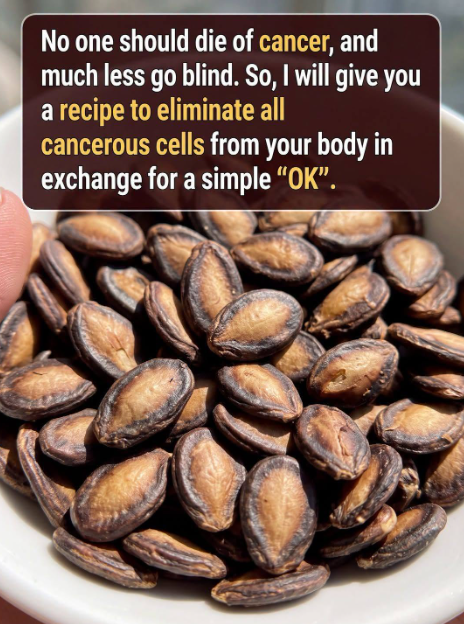
Roasted deep mahogany in a quiet domestic skillet, tiny mineral-dense husks carry heavy algorithmic claims. Viral screens whisper radical cures for complex pathology [cite: 6], swapping oncology wards for pantry-shelf folklore. Yet cellular biology operates on thermodynamics and receptors, not magical kernel transformations broadcasted for a quick nod. Let’s strip the hype to examine what these roasted hulls actually deliver.
Part One
The aroma rises first—nutty, toasted, slightly charred around the jagged edges of a split shell.
Fingers press against warmth, sliding over saline-dusted husks that crunch with sudden acoustic precision.
Somewhere behind a glowing glass screen, a bold caption transforms snack time into cellular rescue [cite: 6].
Millions scroll past the bold declaration, caught between deep ancestral reassurance and modern skepticism.
Are these roasted pockets merely fiber-rich crunch, or do they harbor dormant biochemical keys?
Inside the seed coat, evolutionary design prioritized dormancy, protection, and lipid preservation over human healing.
Heat transforms amino-sugar matrices via Maillard reactions, deepening flavor while altering micro-nutritional structures.
The human mouth registers comfort and salt, while the stomach initiates mechanical breakdown of dense cellulose walls.
No single botanical token rewrites systemic cellular mutations overnight, no matter how earnest the digital testimonial.
Yet dismissing the humble seed entirely ignores actual phytosterol, magnesium, and fatty-acid contributions.
The chasm between culinary nutrition and miraculous pathology eradication widens with every viral share [cite: 6].
Read Next: Uncovering exact lipid oxidation kinetics, phytate-bound mineral bioavailability, and why cellular replication defies kitchen alchemy.
