Part Two
Chronic venous insufficiency originates primarily from valvular incompetence leading to ambulatory venous hypertension.
Sustained upright posture forces distal lower extremity veins to shoulder continuous hydrostatic column weight.
Endothelial cell degradation compromises local nitric oxide synthesis and reactive vascular tone regulation.
Age-related sarcopenia of the calf musculature directly undermines the mechanical efficiency of the muscle pump.
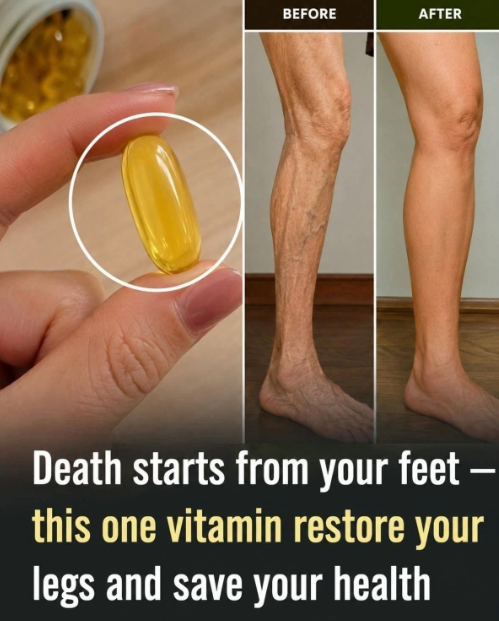
Promotional soft-gel imagery leverages generic fat-soluble nutrient packaging aesthetics familiar to digital audiences.
Vitamin D receptors populate skeletal muscle tissue, supporting type-two fiber contractility and baseline strength.
Rectifying a true vitamin D deficit restores myopathic contractile force but leaves anatomical varicose dilation unchanged.
Collagen structural integrity in deep dermal and fascial compartments relies heavily on adequate ascorbate cofactor availability.
Advanced structural elastin fragmentation in lower limbs resists reversion via isolated nutritional boluses.
Visual transformations in promotional panels routinely manipulate lighting angles, skin tanning, and transient fluid shifts.
Duplex ultrasonography provides clinical certainty by quantifying reflux duration and structural luminal diameter thresholds.
Graduated medical compression garments deliver targeted external mechanical vectors to suppress capillary filtration and edema accumulation.
Targeted resistance programming involving heavy loaded calf raises and ankle dorsiflexion hypertrophies the venous pump core.
Low-grade systemic inflammatory milieus perpetuate leukocyte adhesion cascades and pericapillary fibrin cuff formation.
Nocturnal cramping and heavy-leg syndromes frequently trace back to local electrolyte gradients or mild regional ischemia.
Sustained leg health depends on dietary protein adequacy and micronutrient diversity rather than isolated dietary magic bullets.
Static occupational loading mandates mechanical movement interruptions to flush microvascular pooling stasis.
Persistent truncal or reticular reflux requires clinical interventions ranging from sclerotherapy to endovenous thermal ablation.
Lifelong neuromuscular coordination and fascial tension preservation shield lower extremities across advancing chronological decades.
Concluding summary: Safeguarding lower limb vitality demands active hydrostatic and mechanical stewardship; reducing multi-decade vascular aging to a single vitamin swallow misinterprets human physiology.